Image Map
Showing posts with label teaching. Show all posts

Amazon Book Listing Writing Activity

Sunday, August 30, 2015


My school requires a summer reading assignment for each grade level. In my 4th grade class, students read one required book and three "free choice" books from a list I provide. This year, I asked rising 4th grade students to read The Lemonade War by Jacqueline Davies. I do not like to dwell on the summer reading for too long at the beginning of the year, but I do want students to complete some sort of writing assessment. This year students created a fun Amazon book listing.

First, we looked at actual book listings for favorite books I had read over the summer (hint, hint... generating book recommendations for your students). We identified key features in an Amazon book page and items that seemed to be the same in every book listing.

Students discussed the differences between the book summary at the top of the listing and the book reviews at the bottom of the site page. We noted that the summaries contained more facts and less opinion, but the summaries did try to entice a reader. We also noticed how the summaries did not give away the ending or any surprise twists but created a little bit of a cliff hanger for a potential reader.

Finally, we discussed the "Frequently Bought Together" section in each Amazon listing and the purpose of that feature.

I designed an Amazon-like template and gave the students a copy. Each student completed an Amazon book listing for The Lemonade War that included the title of the book, author, a book level that the students determined like 3rd to 5th grade or 8-11 years old, year published, star rating, summary, and three additional book suggestions.
It is a simple writing activity that could be used for any novel. It incorporates many literature skills like summarizing and identifying important details and main characters. I was also able to sneak some library skills into the assignment by having students look for the year published and choose a reading level for the book. My favorite piece of the assignment is asking students to generate three additional book suggestions that would be good "next reads" to share with classmates.

To download a copy of the Amazon template (and see a few more writing activities for novel studies), CLICK HERE. To purchase a complete Lemonade War novel unit CLICK HERE.

Happy Reading!

Caitlin
TheRoomMom

Alternative Ideas to Daily Reading Logs

Sunday, August 9, 2015


My Dream: All of my students have a book in their hands at all times and run to the library for the next great book choice as soon as they finish the previous great book choice.

My Reality: A handful of students run for the bookshelf; a handful of students walk to the bookshelf, and a handful of students have to be pointed in the direction of the bookshelf.


Since not all students are avid readers, it is nice to have an accountability system in the classroom to track and encourage independent reading. It does not have to be a daily reading log (insert opinion here-- I loathe and detest dislike daily reading logs for upper elementary readers).

In the primary grades when students are learning to read, a daily reading log works well, so students can improve fluency and build their sight word banks. In the older grades when students are reading to learn, I am in favor of more independence when it comes to free reading.

There are many options that do not involve the teacher (and parents) tracking a daily reading goal, which turns reading into something a student HAS to do not something a student GETS to do. There is a big difference in the mind of a student, and motivation is a huge piece to building readers.


1. Have students Track Completed Books, not daily minutes or pages. When students finish a whole book, they log the book title and pages (and maybe reading level too). This works well for all level of readers. Some students may read one longer book or many shorter books. Teachers can monitor by informally checking with each student once a week to ask about book titles and how far along in the book the student is. When a book is complete, the student records the book on their Student Reading Log; the teacher logs the book too. Everybody has a record.

2. Have a short class book chat each day and assign students specific days to present a book. Students read aloud a short passage from their book that they pre-select and briefly discuss what is good (bad?) about the book, character(s) they like, events that are exciting (sad, funny...). Students must have something new to present each time it is their turn. Depending on how many students go each day, a student would need to present a book chat about every two weeks. That would encourage continuous reading. This 5-minute task also provides practice with oral reading fluency and public speaking. 

3. If you use the Accelerated Reader system at your school, assign each student a point goal for each month or grading period (or week). Students can self monitor to reach their point requirement. Easier books have lower point values, so students would need to read more books. If a student chooses a more challenging book, the book might take longer to read but provide more points. Teachers can differentiate reading levels by assigning different point goals to low, middle, and high readers. Set benchmarks throughout the time period (earn X amount of points by this date).

  
4. Require brief assessments when students complete a book to quickly check for comprehension. Complete a short recommendation form; take an AR test, fill out a Book Buddy Bookmark. Avoid big projects or lengthy writing assignments for independent book choices. Save those projects for the books and stories you read as part of language arts class. First of all, that is too much grading for a teacher. Secondly, when students know they will be required to "think deeply" about a book in assignment form, they read less. It interrupts the pure enjoyment (and free part) of a "free" reading book choice.

Other Book Motivator Ideas

  • Allow students to set a personal reading goal. I love Penny Kittle's Book Stacks for middle and high school readers or the idea of a "Tower of Books." 
  • Write Read Me Blurbs about a book (or even a hashtag style comment) on strips of paper and insert the paper on the shelf with the book, so other students may read the comments to encourage new book choices.
  • Each time a student completes a book, he/she can write the book title and author on a piece of paper and add it to a jar or container of some kind. The teacher draws book titles from the jar and that is the book that the teacher will read next. A student may not add titles to the teacher jar unless he or she has read the book.
  • Have students keep a Book Journal. At the end of a block of time (one month, one grading period...), review the book titles and make assessments about the styles of books, book author choices, length/difficulty of books, plots, likes, dislikes, and improvements in reading abilities from the previous book journal reflection. Keep the reflection on its own page in the book journal.

Please share any of your student independent reading ideas in the comments below and happy reading this school year!

Caitlin

What to Buy at the Back to School Sale

Monday, August 3, 2015


Planning to shop the Teachers Pay Teachers Back to School Sale? Me too. I am having a tough time prioritizing what I need. If you are in the same boat as I am, check out some great Lesson Deli sellers "must haves" and happy shopping! (Don't forget to use code BTS15 at checkout.)

 Grammar Flip Chart

The Grammar Flip Chart: This product includes easy to follow notes and tips for all of the essential parts of speech and sentence structures. The product includes 3 options for building the flipchart (cascading cards, binder ring, Dollar Store photo album). Click HERE to see the product.

 Greek and Latin Root Bundle

Greek and Latin Root Bundle: 40 weekly lessons including hands on activities. Great for Daily 5 Word Work! Click HERE to see the product.

 Decimal ZAP Bundle

Decimal ZAP Bundle: Zap games are quick and easy to implement. Add them to a corner of your room for early finishers to pick and play. Click HERE to see the product.
 SS Quick Checks
4th Grade Social Studies Spiral Review: This 30 page set will have your students reviewing key concepts for the new Learning Standards in 4th grade all year long! Click HERE to see the product. (5th grade version also available)

 Common Core 4th Math Club

Common Core Club 4th Grade Math Membership: This growing bundle is a great value. Purchase an entire year's worth of 4th grade math resources that includes task cards, games, homework, and assessments. Click HERE to see the product.

 ELA Made Easy

ELA Made Easy: An Upper Elementary Resource Bundle: If you are looking to implement the Daily 5 in your classroom, this bundle will make your life very easy! Click HERE to see the product.

 Spot It Game

Personification Spot It and Steal It Game: Personification is a breeze to teach with this engaging, hands-on game! Click HERE to see the product.

The Lesson Deli

Summer Reading Reminders

Thursday, June 4, 2015

In recent weeks, I have been reading many posts about getting students interested in reading over the summer. This is a hot topic for me because I am always pushing more reading for pleasure with students. My own children have already made two trips to the bookstore since we finished school, and we may have to go again today. My son finished reading all three books in the Land of Stories series by Colfer, and my daughter read the first Emily Windsnap by Kessler and is looking for the sequel.

I think many of us employ the same tricks to keep children reading during non-school months. Here are three suggestions I have to keep reading alive. What are ways you encourage reading during June, July, and August?

  • Generate a large list to send with your students over the summer. My school has required summer reading, and each grade level has an approved list of books. The list for my grade level is multiple pages, sorted by genre, and includes a wide variety of reading levels. I also add an asterisk to my favorite books, so students have a place to start if the list seems overwhelming. Recommending specific books is often more successful than saying, "Go read something."
  • If your school has required summer reading, keep any related assignments light. I ask students to keep a chart with the title and author and also complete a brief comprehension bookmark with notes while reading (pictured at the top). No big book reports. If assignments related to summer reading are too long, students treat reading like a chore rather than a treat. If you need help creating a summer reading assignment and book list for students, THIS ONE can help you get started.
  • Get involved in a reading incentive program. Our local library has a summer reading challenge. Students complete a chart based on minutes read. Local businesses and organizations donate free coupons, so students can earn tickets to a minor league baseball game, free frozen yogurt, complimentary karate class at a local karate school, etc. Barnes and Noble has a similar reading program. Children complete a reading journal as they finish reading books. When the journal is complete, bring it to a local Barnes and Noble to redeem for a free book. Our librarian sent a copy of the reading journal home with each student in the final take home packet of the year.

If you are looking for summer reading ideas for upper elementary students, here are a few books on my list:
  • The Fourteenth Goldfish by Jennifer Holm
  • Savvy by Ingrid Law
  • The Penderwicks by Jeanne Birdsall
  • Under the Egg by Laura Max Fitzgerald
  • Graceful by Wendy Mass
  • The False Prince by Jennifer A. Nielsen
  • Rain Reign by Ann M. Martin
  • Greenglass House by Kate Milford

Happy Reading and Happy Summer!
Caitlin (TheRoomMom)

Poetry Prompts

Sunday, February 8, 2015

This Friday, my fourth graders will participate in the 4th annual Poetry Slam at my school. It is actually something the music teacher and I cooked up a few years ago, so my students have an opportunity to share their favorite original poem with each other and their families. 

Before our school music teacher gets involved, my students study five different figures of speech and create five poems that demonstrate each figure of speech at least one time. Writing poetry can be intimidating for kids, so I break down different poems and types of figures of speech into simple activities to help students create their own poetry.
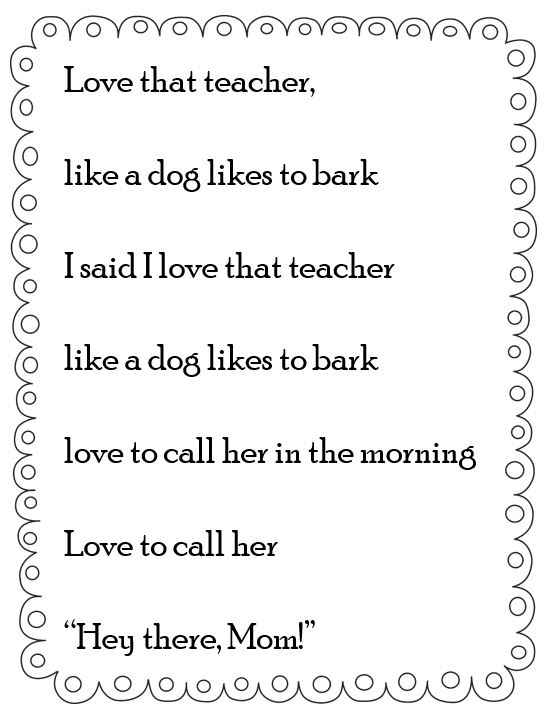
  • Take an existing poem by a famous author and borrow the structure, repeated words, or style. While reading the novel, HATE THAT CAT, we use the poem, "Love That Boy" by Walter Dean Myers to create an "inspired by" poem.  My students keep the beginning of most of the lines and develop their own simile (so I get to teach simile at the same time). My son is actually in one of my language arts classes this year and his "inspired by" poem made me cry. He does not know I am reprinting his poem here... and sharing it on Facebook... and Tweeting it... and Google+'ing it because I thought it was so sweet.
love that teacher poem
  • I try to match up adjective and adverb grammar lessons with my poetry unit. Give the students an everyday object and ask them to generate a list of adjectives that describe the object. This year, I had my students use one of their shoes as the everyday object. They used a template with blank lines and dropped the adjectives onto the lines and then designed a concrete poem.

  • I have a big list of topics that I cut into little strips and put into an envelope. Each student draws a topic from the envelope. I like to choose topics from nature like a cloud, mountain, tree, flower, sunset, or ocean. The students write five sentences about the object, but each sentence must use personification. We spend some time talking about human traits, and I provide a traits list on their class activity page. The cloud could offer comfort. The mountain could glare down at you. The flower could dance. The students list the five sentences and then move the sentences around a little and edit to create a poem.
personification activity


  • A fun activity I used with my early finishers during our poetry study was book spine poems. You may have seen book spine images floating around on Pinterest. I have a vast classroom library, and the students stacked books to create a poem from the book titles. This year, they took a picture with our class iPads and inserted the image into a PicCollage and added an explanation of their poem. In previous years, students have used MSPublisher to publish their book spine poems.
Poetry can be fun for students and offer a creative way to express feelings students might not share otherwise. I have also started to realize how much poetry enhances all areas of language study and because poems are often short, it provides a great literature alternative when teachers run short on instructional time.

Need some new poetry resources? 

Here are links to great products by our Lesson Deli members:

TheRoomMom's Poetry Unit and Figures of Speech Game (includes activities listed above)

The Owl Spot's Robert Frost Author Study (and other author studies)
Teaching Ideas 4U's Poetry Writing Unit
JB Creations' Revolutionary War Poetry Unit

Happy Writing!

TheRoomMom

Making Number Lines

Wednesday, January 21, 2015


A great resource for making number lines. 

A great number line is hard to find. Now there is a site where you can custom make number lines to suit your needs for free.

At math-aids.com there are many options to choose from.

1) You can generate blank number lines. Your options include positive or negative numbers, and different ways to break up the number line into whole numbers or fractions.

2) You can create worksheets to add or subtract numbers on a number line.

3)You can create worksheets to locate fractions, mixed numbers, or decimals on a number line. This also includes positive or negative numbers.


Protecting Paperback Books

Sunday, August 17, 2014

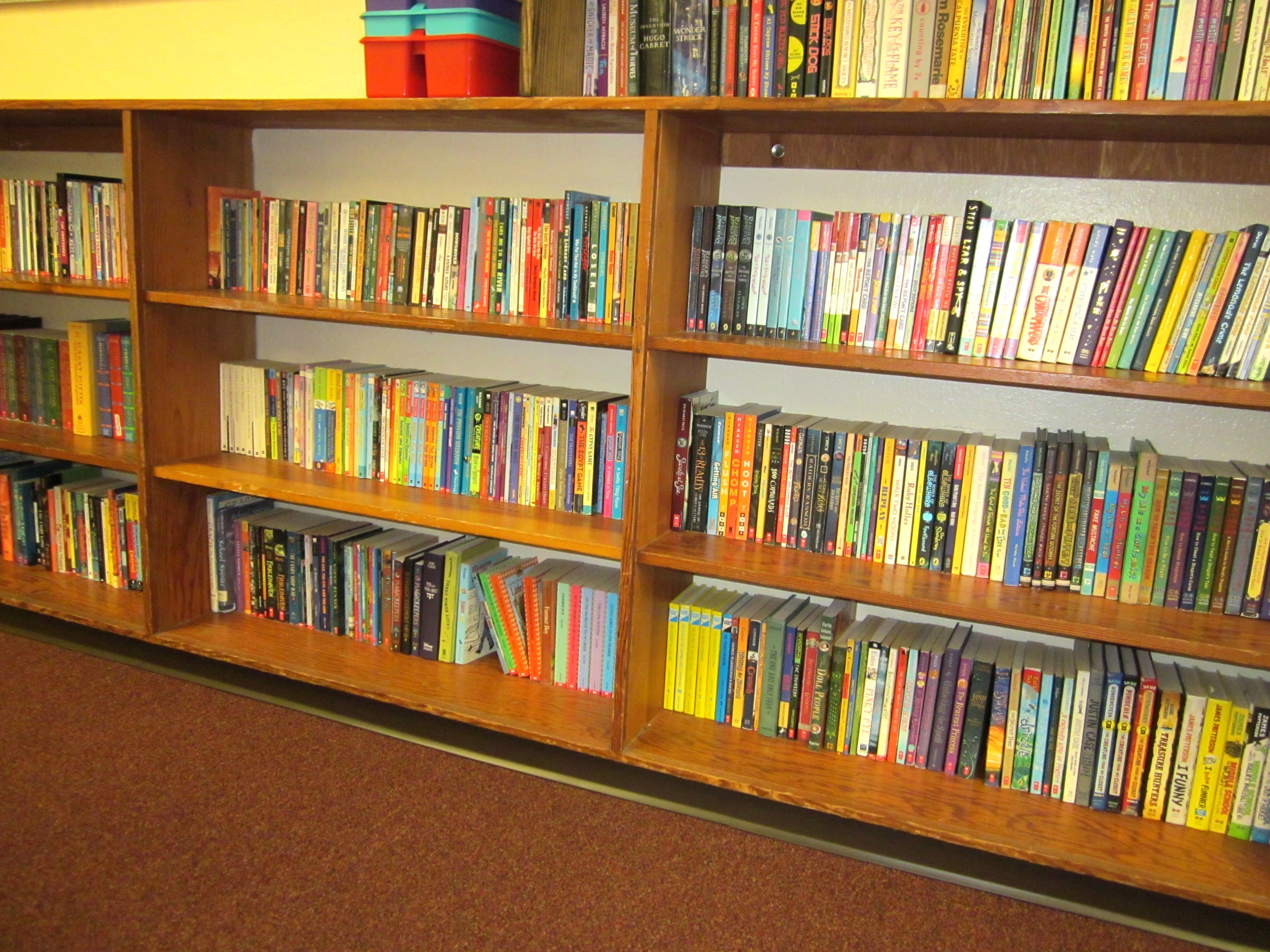
classroom library

My classroom library is my pride and joy. It is like a third child to me, and I take great pains to protect it. Many student hands come in daily contact with the book collection and have the potential to destroy one of my cherished books. One defense I use to protect my library is to wrap each book in clear contact paper. This is a labor of love for sure but well worth it. If you have invested both time and money in a quality classroom library, wrapping your books will extend their lifespan.

covering books materials

Materials
  • Con-Tact Brand Shelf Adhesive Shelf Liner clear with matte finish and gridlines (I usually purchase at WalMart or Staples)
  • paperback books
  • sharp scissors
  • clear, flat surface like a large tabletop with a straight edge
Directions
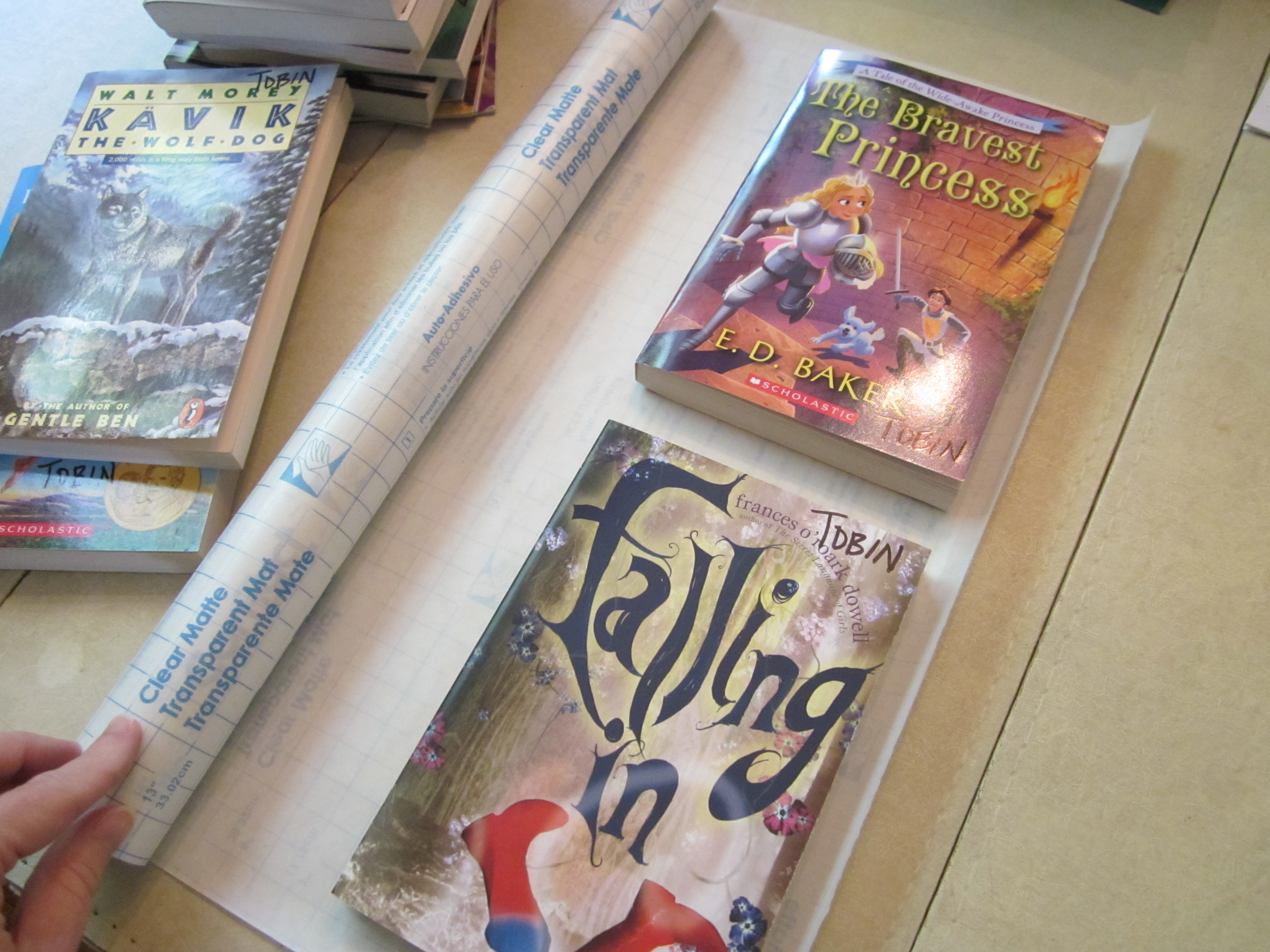
  • For standard sized paperback books, measure 2 books of about the same size at the same time. Unroll a little of the contact paper with the gridlines facing down and the roll unwrapping to the left. Set two books, cover facing up, on the contact paper. The books act as a weight to hold the contact paper still as well as guidelines for measuring the size of the cover needed for the book.
covering books step 1
  • Carefully take the fattest book and roll it over the contact paper to the left, so the cover will be face down. This measures the length of contact paper you will need for both books. Cut the contact paper about 1 inch beyond the edge of the fatter book. Use the gridlines to help cut straight lines.
covering books step 2
  • Keeping the books spaced on the contact paper, cut down the center of the two books making sure there is (roughly) even amounts of contact paper above and below the edges of each book.
covering books step 3
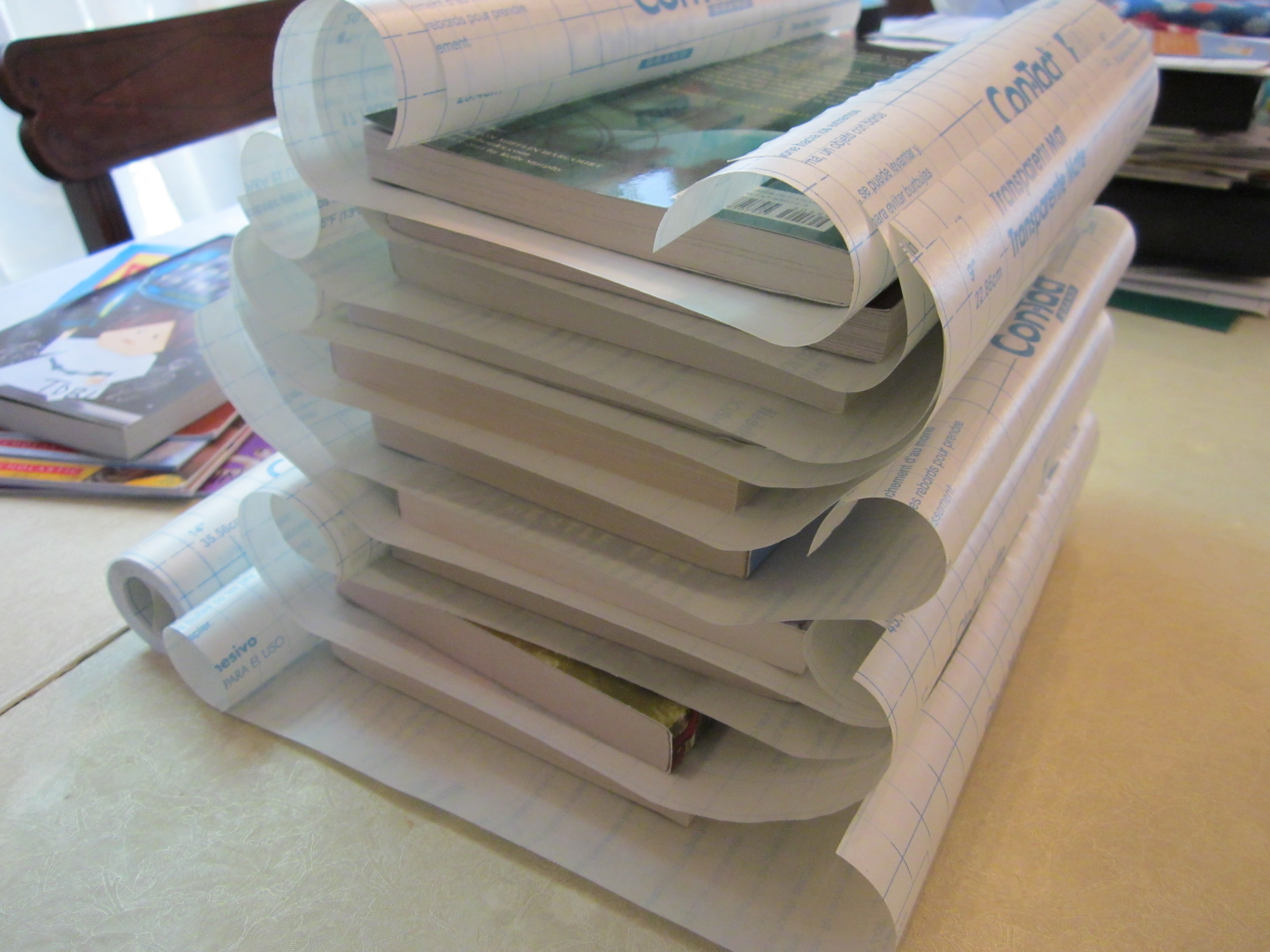
  • Cut sheets of contact paper for all books that need to be covered at one time to make the process more efficient. Keep each book with its matching piece of contact paper.
covering books contact paper prep
  • Take one piece of contact paper and put it on a flat, clear surface with the gridlines down. Set the book that goes with that piece of contact paper on top. The paper rolls up a little, and the book helps keep the contact paper spread out. Using your fingernail, gently peel away the paper backing starting at the top or bottom corner. I like to start with the top right corner, and I am right-handed. If you do not pull the backing away evenly, the paper will crease leaving a line that looks like a scratch (which drives me crazy). As you pull the backing away, lift the paper up off the table letting the book fall off.
covering books step 4

covering books step 4a
  • Once the backing is off the contact paper exposing the sticky side, place the paper sticky side up on your flat surface landscape direction. Have the bottom edge of the contact paper line up with the bottom, straight edge of the table. This will help keep book placement on the contact paper straight and even.
  • Gently set the back cover of your book near the right edge of the contact paper. Try to leave about a 1-inch border on the top, bottom, and right side of the book. In other words, center the top and bottom of the book on the contact paper and have the book close to the right edge of the contact paper.
covering books step 5
  • Pick up the book from the right side and smooth the back of the book with your free hand. Begin to wrap and push the contact paper around the spine of the book. Turn the book over and carefully press the contact paper across the cover pushing from the spine towards the loose end of the pages.
covering books step 6

covering books step 7
  • Smooth out any bubbles between the book and contact paper by pushing gently with your fingers and/or heel of your hand to the closest edge.
covering books step 7a
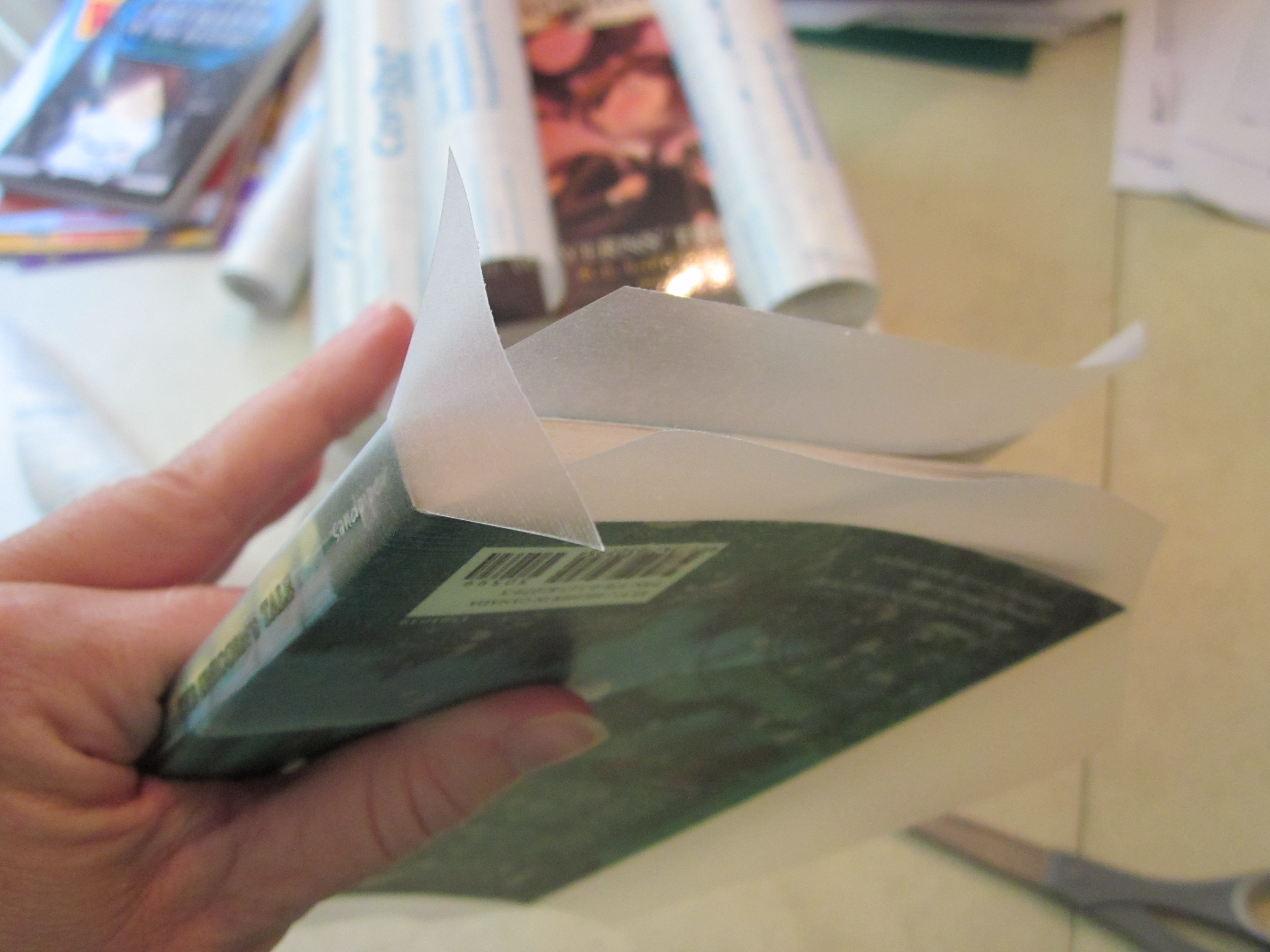
  • With your scissors, cut diagonally along the top 2 outside corners and the bottom 2 outside corners. You will snip off triangles.
covering books step 8b
  • Make diagonal snips on the front and back corners near the spine.
covering books step 8
  • Press the sticky tab of contact paper on the top of the spine to your pointer finger and pull it back and down until it separates just a little below the spine of the book. Snip the tab of contact paper off the book. Repeat at the other edge of the spine.
covering books step 9a
  • You will now have 3 flaps hanging over the edge of the front cover of the book and 3 flaps on the back. Carefully wrap the flaps around the cover of the book and stick them down to the inside of the covers, pressing carefully to avoid wrinkles.
covering books step 10

covering books step 10a
Notes
  • Your first few books will probably have wrinkles and mis-aligned contact paper. You get better (and faster) at covering the more you practice!
  • There are a variety of clear "shelf" papers available. The Con-Tact brand is my favorite, and the easiest for me to use.
  • If you have a large library, I would not recommend going back to cover every book. I would begin covering any new books that you add to your collection and any damaged books that you have.
  • To cover a damaged book (hardback or paperback), repair with clear packing tape first, then wrap in contact paper.
classroom library 3

 I would love to hear some other suggestions to help care for a classroom library. What steps do you take to keep the books in good condition and accounted for? 

Caitlin Tobin

Cool Supplies at the Big Box Stores

Wednesday, July 9, 2014

I promised my teenager a trip to the store yesterday, and I entertained myself looking for school supplies while trying to ignore what she was picking out to try on.  I mean, why raise my blood pressure until I absolutely have to do so?

We hit Target, which honestly is about the only store we ever get to……and I think I spent 10-15 minutes at the Dollar Spot inside the door.  Then I moved on the toys and games for the 4th grader, and managed to find a game for school, and then finally we hit the summer clearance.  I had half a cart for me!  But look at what I found:


To be fair, I found the small crates (and big ones) at WalMart. 

Let me tell you how I plan to use all of these items.

US Maps – $1 – Target Dollar Spot – If you are like me and have zero classroom maps, these are just fabulous – and cheap.  I bought 12 and plan to laminate them in order to make them “dry erase” maps.  The maps do have the state names and capitals on them, but in 5th grade we do landforms, waterways, etc., so this will be a terrific hands on tool.

Megaphone - $1.40 on clearance in the summer aisle – Target – Well, some of us are not blessed with loud whistles, and honestly, it was just cool (and loud.)

Packs of Erasers - $1 – Target Dollar Spot – My kids told me to get the packs of ice cream and crayon erasers.  There were also apples.  I plan to use these as cheap rewards. 


Dictionaries - $1 Target Dollar Spot – Okay, I know you are thinking, dictionaries?  However, they also had thesaurus and rhyming dictionaries.  (For Spanish teachers, they have Spanish-English dictionaries.)  I bought a rhyming dictionary and thesaurus for each table group.

Campbell’s Soup Alphabet Game - $7 – Target Game Clearance – I totally do not intend to play this as the game.  It comes with 36 alphabet dice.  I am thinking of using this to play Boggle on the doc cam.

Picnic Utensil Holder - $8 – Target Summer Clearance – Depending on where you live, these may be hard to find.  My Target only had 2 left, but I bought some last summer – they have them every year in different colors.  These are metal, so they are a bit pricey – that is why I try to catch them on clearance.  These are just the best organizers in the world.  Seriously.  I reorganized my entire craft closet at home with them.  I have one on my desk at school.  This year I plan to try table groups, and I am going to put a number on each one and keep the table supplies in it: pencils, highlighters, scissors, glue, thesaurus, rhyming dictionary, etc. 


Crates – small $1, large $3.50 – WalMart – They had at least 5 colors of the mini-crates and many more of the large ones.  I used the small ones to organize my classroom library last year, and I actually ran out of space.  Apparently, this size is hard to find after the college supplies are gone.  For $1, grab as many as you think you will need, and then add a few more.  I use the large ones for everything.  I use one for a library book return, one for portfolios, one for “to be copied,” etc.

Have you found any great deals for back to school?  What is your best classroom organization tip?

Amy Mezni